Press
Six New Projects Emerge from the CFA Communities of Practice Fund Sandpit
Shauna Kelly
Published - August 18, 2026
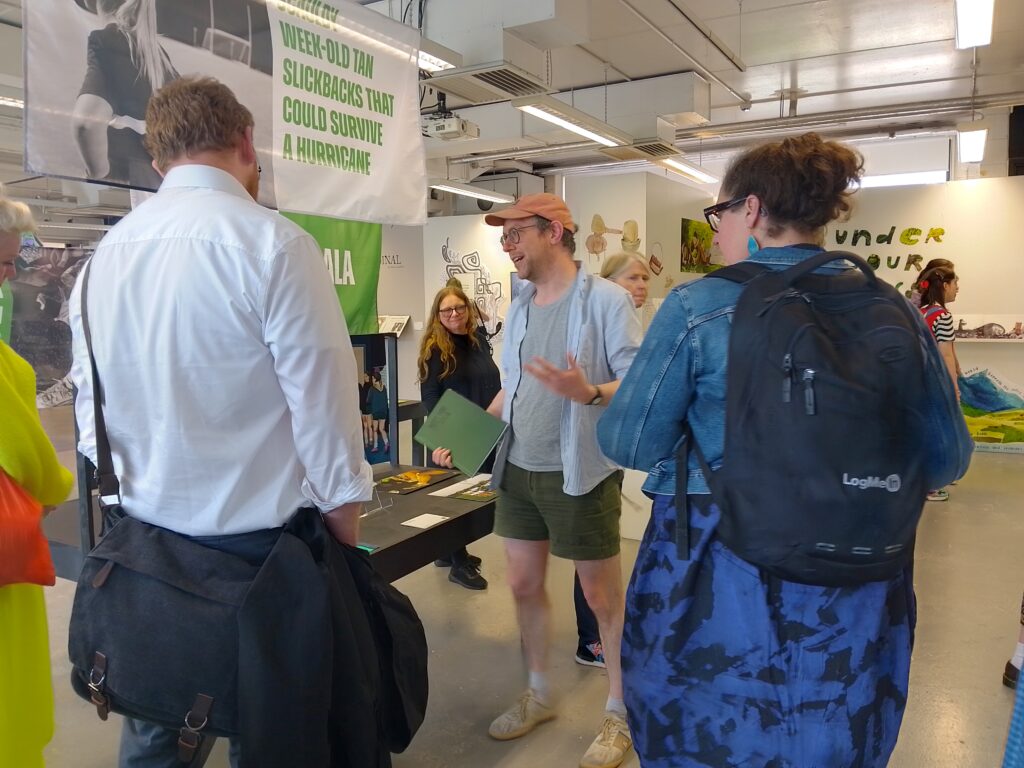
On 8 June, staff from NCAD, IADT and UCD gathered at NCAD for the CFA Communities of Practice Fund Sandpit – an afternoon designed to do something universities don’t always make time for: put people who don’t yet know each other in a room, hand them an idea, and see what happens.
The premise of the Communities of Practice Fund Sandpit was simple. No pre-formed teams required. No existing project needed. Just a willingness to share an interest, meet colleagues from across the three partner institutions, and build something together before the day was out. After teams pitched to an expert panel and all projects were reviewed, by the end of the day six proposals were announced as successful.
What emerged was a genuinely wide-ranging slate: a woven “living room” built with Somali nomadic weavers, an analogue synthesiser reimagined as a metaphor for creative collaboration, a slow media trilogy exploring language and materiality, an outdoor pedagogy triangle spanning three campuses, a project on the ethics of finite computing, and a cross-genre publishing pilot for literature students. Different disciplines, different budgets, different timelines – but every one of them built on the same premise: that some ideas simply can’t happen inside a single institution and how important cross-institutional collaboration is.
Here’s what’s coming:
Led by Jennie Moran (NCAD), with Hugh Campbell (UCD Architecture and Planning) and Sheffield’s Bare Project — Dr Malaika Cunningham and Saada Osmen — this project brings the Higsad Alool Weavers collective to NCAD to construct a performative, interactive “living room,” built using nomadic Somali weaving knowledge and skill.
Over several days, students will work alongside the weavers as the structure takes shape, then help design a programme of gatherings, talks, meals and performances to take place inside it — an immersive enquiry into hospitality, hosting, and unconditional welcome. Once built, the living room won’t stay still: it will travel between NCAD, UCD and beyond, becoming a standing provocation to host convivial gatherings long after 2026. A set of poetic, publicly shared guidelines — developed with Cunningham and Osmen — will accompany it, along with photographic documentation and media coverage.
Dunk Murphy (UCD), Stephen Mac Devitt (NCAD) and Fola O’Grady (IADT) are building an immersive installation around the ARP2600, a historically significant analogue synthesiser, treating language, sound and image as equal creative partners.
Structured around a “creative flywheel” – energise, reverberate, synthesise, illuminate, energise – the project embeds hidden verbs within projected poetry, inviting audiences to discover action within apparently fixed language. A growing ReVerb Archive will collect audience contributions as the piece moves between IADT, UCD and NCAD, so each showing carries traces of the last. The team plans a lightweight, portable, “guerrilla-style” deployment across all three campuses this autumn, with an eye on future outings at festivals, civic events, and Creative Skills Week in Brussels.
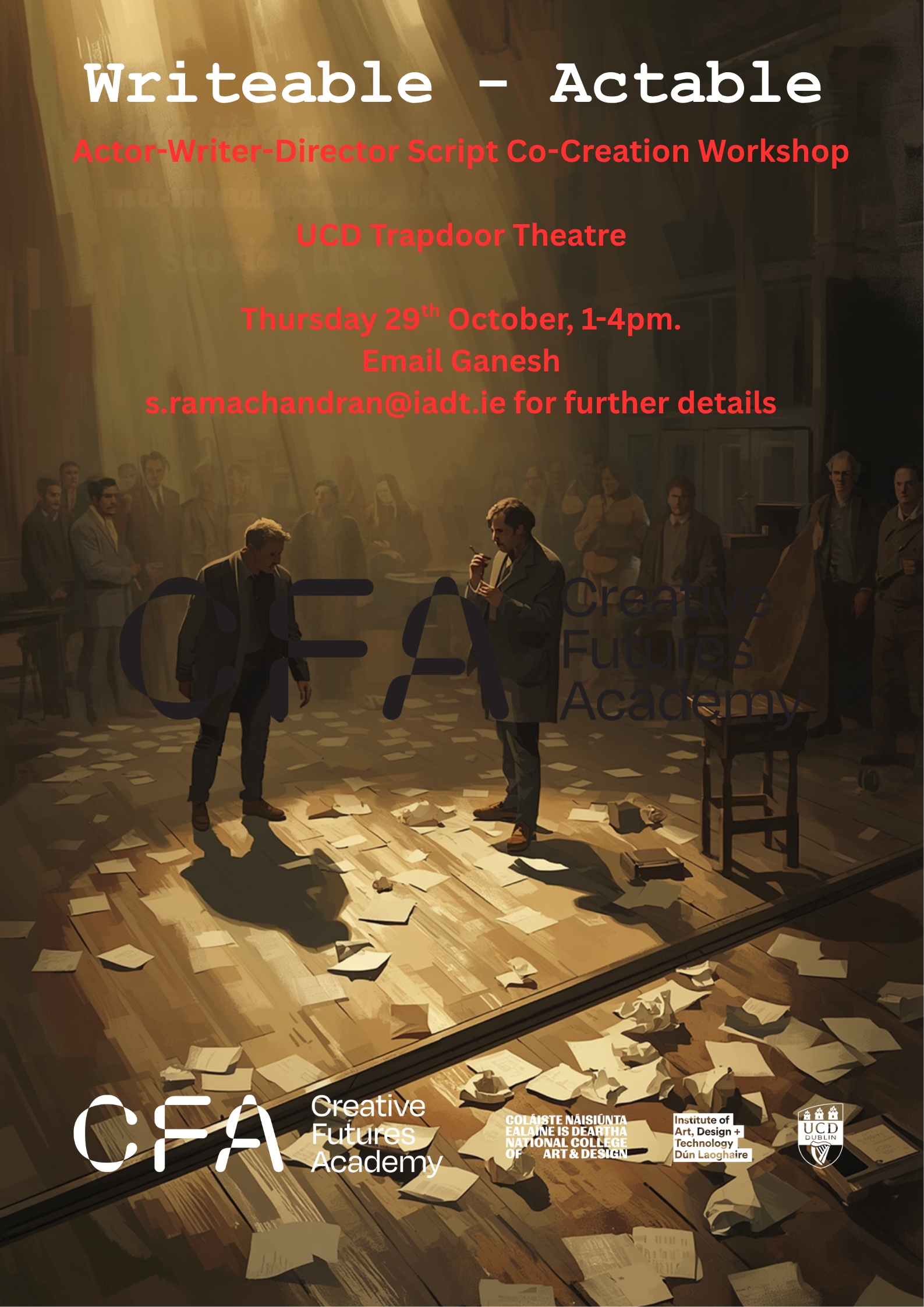
Katherine Fama and Lucy Collins (UCD), Claire Nidecker, Sarah Durcan, Cliona Harmey and Philip Kennedy (NCAD), and Ganesh Ramachandran (IADT) are running a series of three workshops exploring language and materiality across page, film and performance.
Each three-hour session – Generative Scriptwriting (IADT-led, with UCD Drama faculty and actors), Experimental Moving Image (a typographic exploration on 16mm analogue film), and Playing with the Page (a poetry zine workshop with IADT book artists) – will rotate across host institutions between October and December, bringing together practitioners, researchers and technicians alongside 15 staff and students per session. The series will produce new texts and art objects, an online showcase, and the foundations for an annual exchange.
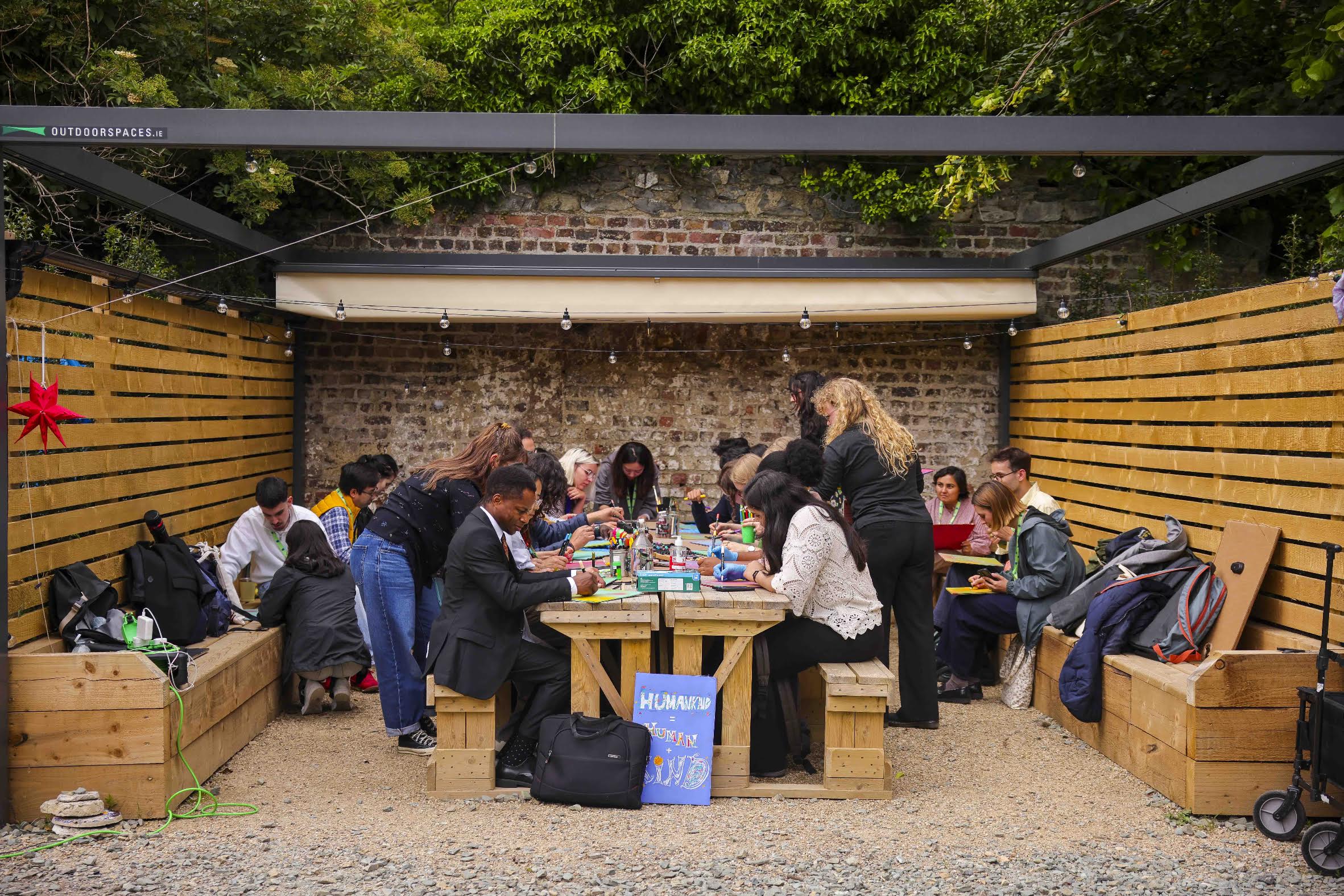
Led by Seoidín O’Sullivan (NCAD) with Clyde Doyle (IADT) and Dr Thomas Macagno (UCD), The Green Triangle connects three outdoor learning spaces – the NCAD FIELD, the IADT Orchard & Glade, and UCD Greenacre – that have each been quietly developing as sites of pedagogical experiment, largely in isolation from one another.
Three hosted site visits in September and October will bring 18–20 participants to each location for shared presentations, walking encounters, and dialogue on ecology, wellbeing and institutional practice. November and December will be given over to synthesis: a minimum three-episode podcast series, a written synthesis document, and a shareable framework for inter-institutional outdoor learning — plus early groundwork for future research funding and curriculum partnerships, potentially extending into UCD’s Earth Institute.
Una Europa Summer SchoolsPhoto Chris Bellew / Fennell Photography
Cliona Harmey (NCAD), Rhealyn Mugri (IADT) and Seamus Ryan (IADT) are using the prompt of “finite computing” to challenge assumptions of infinite resource use in technology, working with two invited facilitators: Colm O’Neill (technical literacy and permacomputing) and Clare Breen (developer of the “Bread Fellows Chat” methodology).
The first workshop reconfigures old mobile phones as a way into obsolescence and cultures of re-use; the second uses clay object-making as a prompt for dialogue on materiality, computation and ethics. Outputs will be pooled into a shareable, annotated resource hosted on Are.na — a non-extractive, ad-free platform — alongside a print-on-demand publication, culminating in a cross-institutional public panel event.
Katherine Fama and Lucy Collins (UCD), with Philip Kennedy (NCAD) and Laura Butler (IADT), are piloting a cross-genre module collaboration within UCD’s School of English, Drama and Film. Students from two final-year seminars — Women Poets, Embodied Subjects and Sexuality in Modern American Fiction — will work in small teams on shared thematic exercises, culminating in collaboratively created book pages that answer an essay prompt through text and image.
Building on the process-oriented grading model developed in a previous IADT–UCD collaboration, the pilot introduces literature students to studio arts methods via illustration and bookbinding workshops led by Kennedy and Butler. The result: a bound class book on shared themes of dwelling, labour, intimacy and mothering, digitised for the CFA website — and a template for opening the modules to NCAD and IADT students in future years.
All six projects are currently underway and we’re excited to follow their journey and showcase the progress and results. Watch this space for updates, documentation and events as each project unfolds.