Conference
News
Press
Shaping Ireland’s Creative Future: Measuring What Matters
Shauna Kelly
Published - March 26, 2026
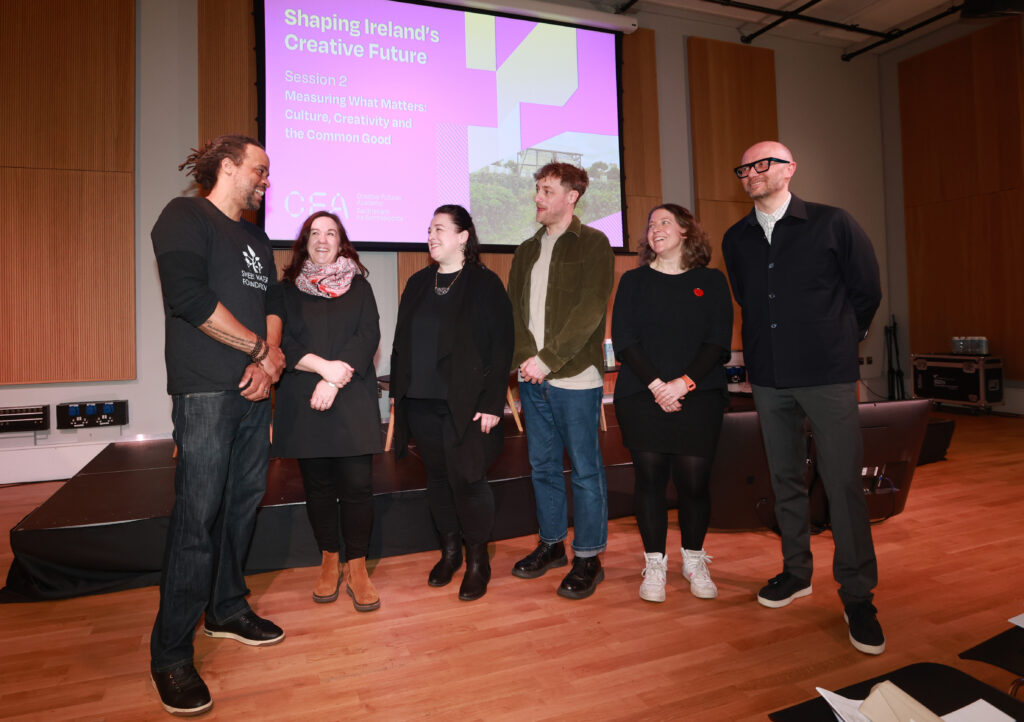
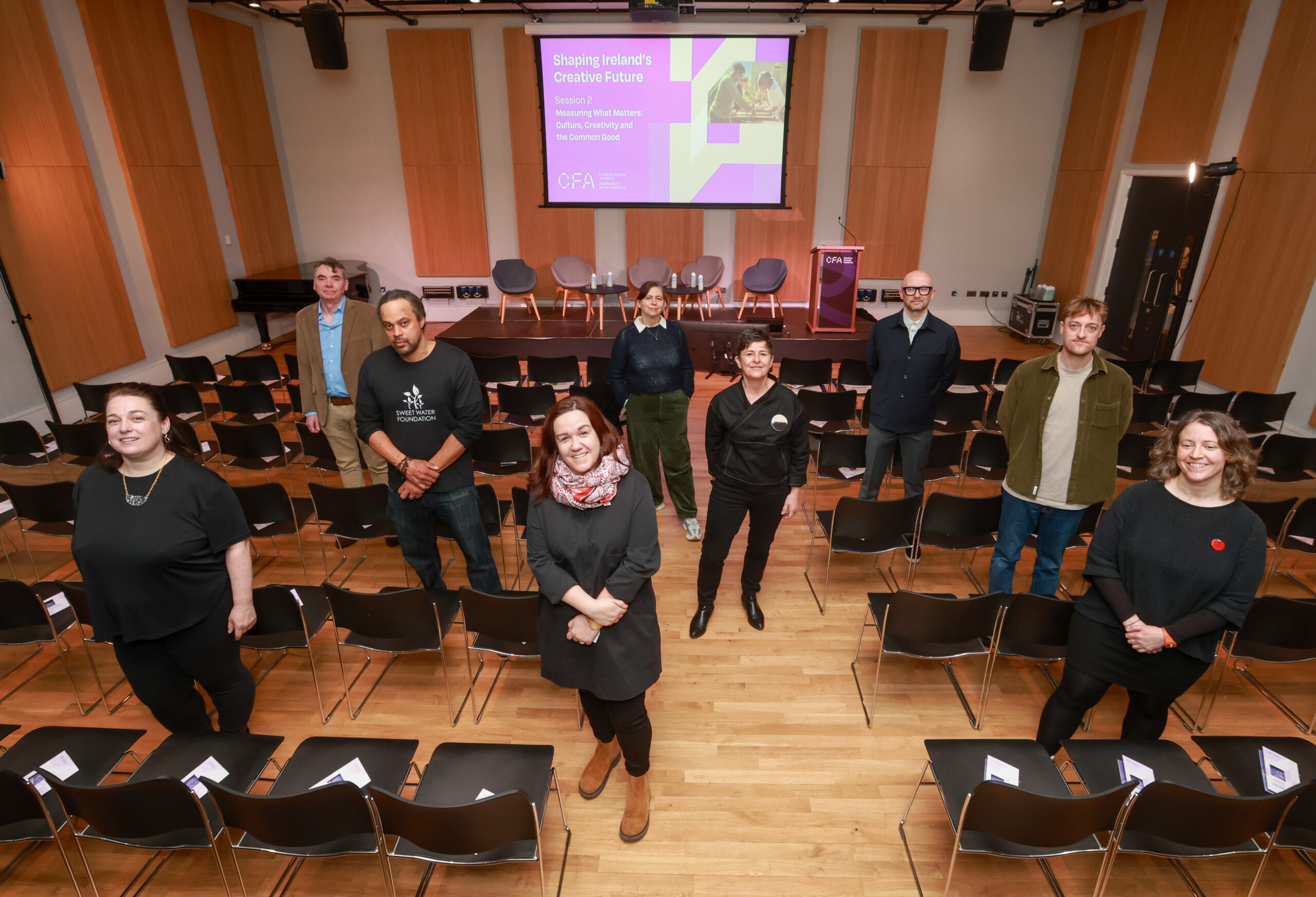
On Tuesday, March 24th, 2026, the Royal Irish Academy of Music (RIAM) on Westland Row became a meeting point for some of Ireland’s most engaged creative thinkers and practitioners. Convened by Creative Futures Academy (CFA), this second session in the Shaping Ireland’s Creative Future series set out to explore a critical question:
How do we measure the value of culture beyond economics – and why does it matter now?
Opening the session, Prof. Sarah Glennie (Director, NCAD) framed the day within CFA’s broader ambitions: to connect disciplines, expand lifelong learning, and advocate for the wider value of the creative and cultural sector. As moderator Louise Allen (Director, CFA) emphasised, the goal of the session was not simply discussion, but a shift in perspective. Culture must be understood as infrastructure: something that underpins trust, resilience, and democratic life.
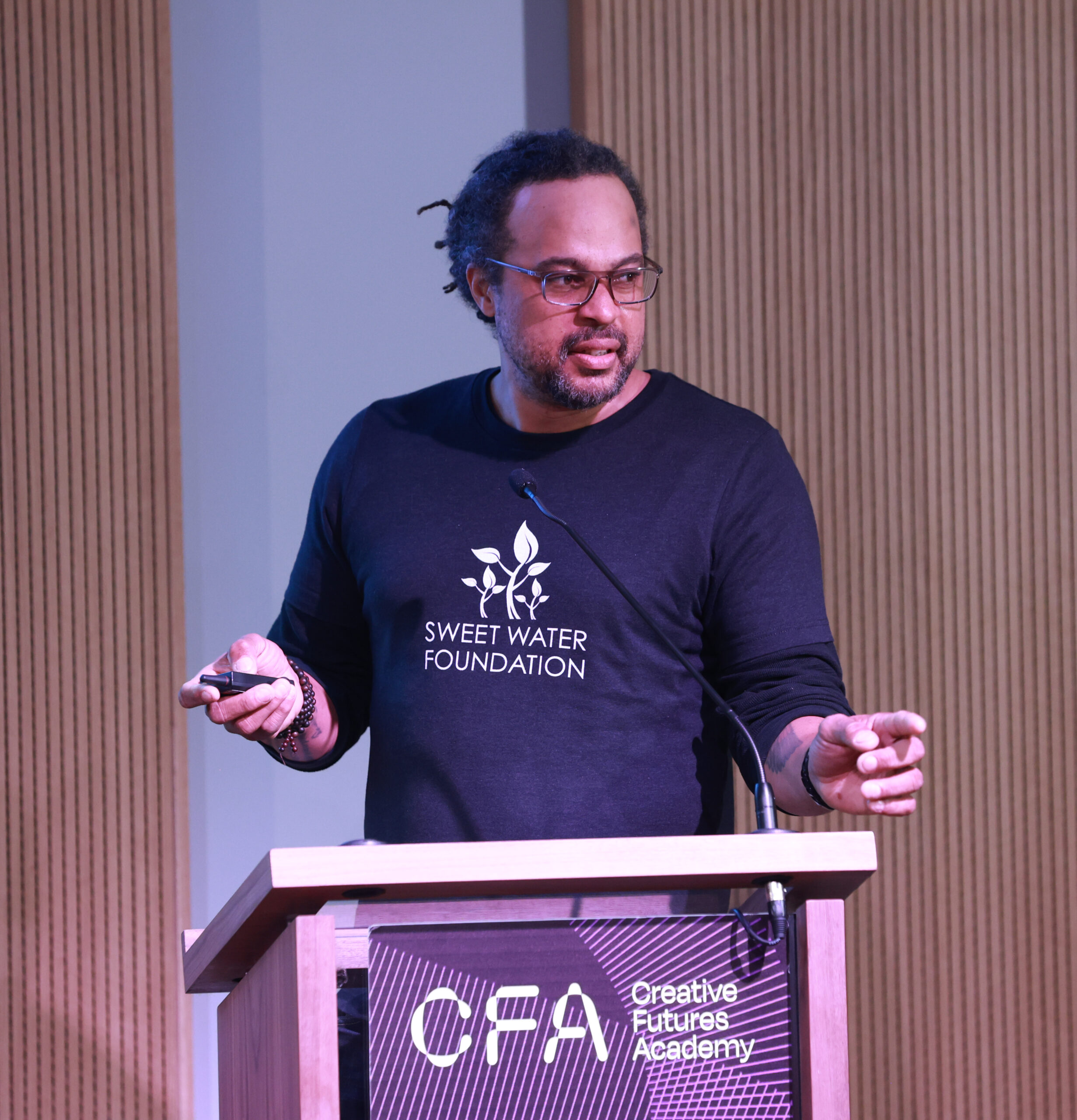
The keynote by Emmanuel Pratt, Co-founder of the Sweet Water Foundation, grounded the conversation in lived experience.
Drawing from his work in Chicago, Pratt described the transformation of vacant urban land into The Common|Wealth: a regenerative “communiversity” blending ecology, education, design, and civic life.
His approach introduced powerful ideas:
Rather than measuring outputs alone, Pratt urged us to consider relationships, trust, and long-term transformation as indicators of success.
A core strength of the session was its grounding in real-world Irish projects: demonstrating how culture operates as a lived, relational force.
Long-Term Engagement and Youth Work
Dr Fiona Whelan (NCAD) and Gillian O’Connor (Rialto Youth Project) reflected on their collaboration through Boys in the Making. Their work highlighted the importance of:
Their contribution underscored a key tension: meaningful social impact often cannot be rushed or easily quantified.
Towns as Cultural Ecosystems
Dr Philip Crowe (UCD Centre for Irish Towns) presented insights from projects such as the Cascade initiative in Ballina. He positioned Irish towns as:
Key themes included:
His work highlighted the complexity of measuring impact across time, scale, and stakeholders.
Voice, Slowness and Critical Practice
Dr Jessica Foley (IADT) brought a reflective and critical dimension to the discussion, exploring concepts such as:
Her work challenged dominant, efficiency-driven systems, asking what might emerge if we prioritised curiosity, ambiguity, and reflection.
Design for Human-Centred Value
Karl Toomey (Wove) shared insights from his project 31 Days of Being More Human—a global collection of initiatives that challenge conventional ideas of value.
Across design, healthcare, and civic life, these examples shared a common thread:
His presentation reframed creativity as a tool for re-humanising systems that often prioritise efficiency at the expense of lived experience.
Chaired by Prof. P.J. Mathews (UCD), the panel discussion brought together speakers to explore how Ireland might rethink its approach to cultural value.
Drawing on themes from a prior speaker roundtable, the conversation centred on:
Key questions explored included:
The discussion made clear that measurement is not neutral, it shapes what is funded, prioritised, and ultimately valued.
Looking Ahead
As the session closed just before 1pm, there was a clear sense that this was not a conclusion, but a continuation.
The questions raised throughout the morning remain open:
What Shaping Ireland’s Creative Future – Session 2 demonstrated is that Ireland already has the ideas, the expertise, and the commitment. The next step is alignment between policy, practice, and people.
With thanks to all speakers and participants for engaging in this timely and important conversation.
Images by Sasko Lazarov / Photocall Ireland